Written by : Chris Lyle
Nov 18, 2025

Estimated reading time: 14 minutes
Key Takeaways
Legal chatbot personalization AI adapts tone, styling, and responses to individual client needs, enhancing communication and client engagement.
Adaptive chatbot tone enables switching between formal and conversational styles based on context, improving client comfort and professionalism.
Dynamic message formatting tailors chatbot communication to device, urgency, and client type, optimizing legal intake efficiency.
AI persona adaptation aligns chatbot interactions with specific attorneys or firm branding, fostering trust and consistency.
Legal chatbot styling preferences allow firms to maintain brand identity visually and linguistically across chatbot interactions.
Implementing chatbot personalization requires strong privacy, security, and compliance practices to handle sensitive client data safely.
Table of Contents
Introduction: The Era of Legal Chatbot Personalization AI
Section 1: What Is Legal Chatbot Personalization AI?
Section 2: Adaptive Chatbot Tone Law Firms
Section 3: Dynamic Message Format Legal Intake
Section 4: AI Persona Adaptation Attorneys
Section 5: Legal Chatbot Styling Preferences & Customized Response AI Intake
Section 6: Benefits of Personalized Legal Chatbots
Section 7: Implementation Considerations & Privacy
Conclusion & Next Steps
FAQ
Introduction: The Era of Legal Chatbot Personalization AI
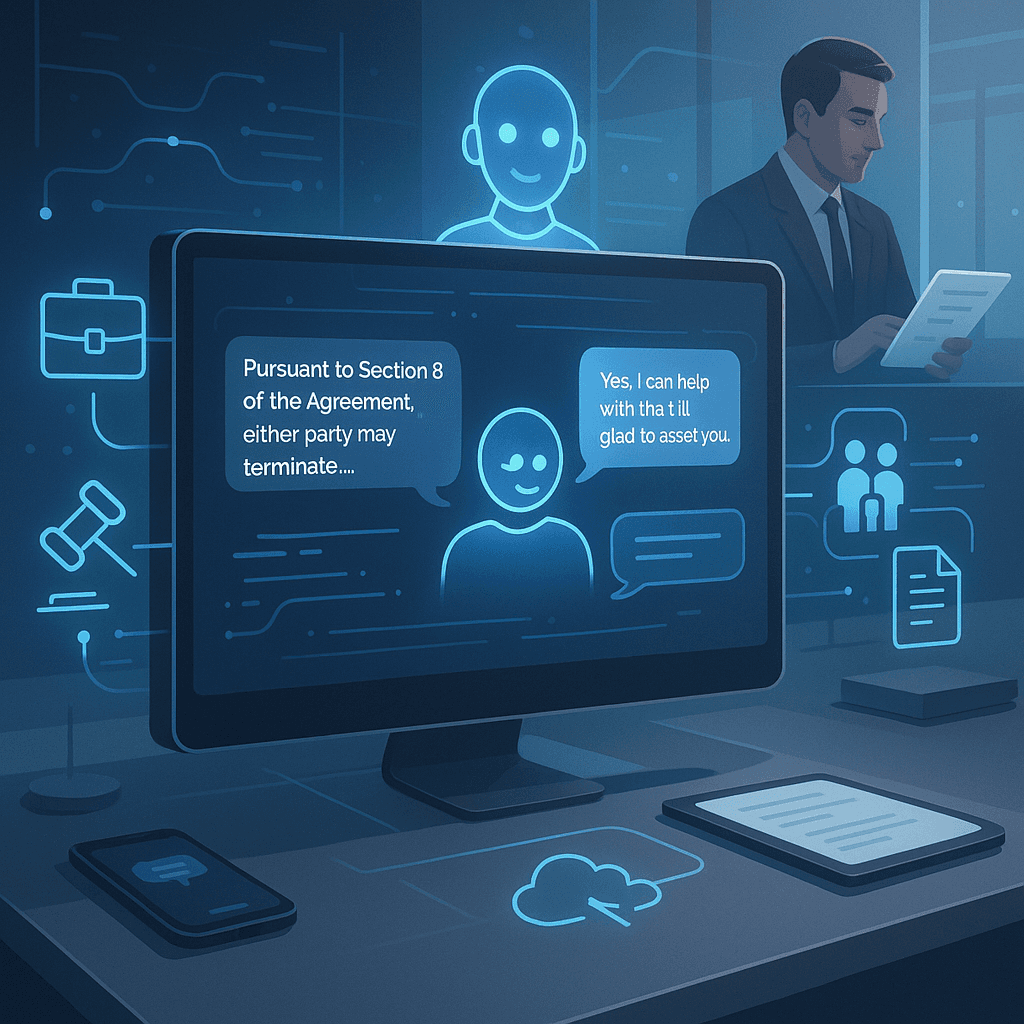
Legal chatbot personalization AI is reshaping how law firms connect with and serve their clients. Instead of relying on static, one-size-fits-all chatbot scripts, today’s law firm chatbots leverage advanced artificial intelligence (AI) to transform legal intake and client engagement using adaptive tone, dynamic message formatting, and customized responses.
This innovation enables bots not just to recognize who is engaging with them, but to adapt every aspect of the conversation—style, content, formality, and even graphical presentation—according to the context and needs of each client. This level of real-time personalization strengthens client relationships and enhances both efficiency and experience in the legal sector.
The purpose of this blog is to provide a deep dive into how adaptive, personalized legal chatbots can address the diverse and complex requirements of law firm clients. We will explore how dynamic tone, customized message formats, persona alignment, and styling preferences are revolutionizing legal intake processes, all supported by leading research and industry practices.
Keywords: legal chatbot personalization AI, adaptive chatbot tone law firms, dynamic message format legal intake, AI persona adaptation attorneys, legal chatbot styling preferences, customized response AI intake.
Learn more in these foundational resources:
- From Case Law to Chatbots: The Rise of Legal AI Assistants
- Legal AI: The Revolution is Here
- Legal AI Chatbots: The Future Is Now
Section 1: What Is Legal Chatbot Personalization AI?
Understanding Legal Chatbot Personalization AI
Legal chatbot personalization AI refers to chatbots powered by sophisticated machine learning that individualize every client interaction. Unlike generic chatbots that offer scripted responses, these systems adapt in real time: https://golawhustle.com/blogs/ai-chatbot-for-law-firm-website
Adjusting conversational tone and message structure based on a user’s profile and communication style
Filtering and customizing information such as delivering legal explanations at the right level of complexity (layperson or expert, urgent or routine)
Altering stylistic elements (like formality and detail) to match firm branding and client expectations
This advanced personalization goes well beyond simply using the client’s name (a basic form of personalization). It might mean a chatbot offers straightforward instructions to a first-time client, while giving expanded legal context and documents to a returning business client. The moment-to-moment choices made by legal chatbot personalization AI ensure every conversation is relevant, natural, and efficient.
Key Drivers of Legal Chatbot Personalization AI
Scalable yet tailored experiences: Growing demand for legal services means firms need to cater to diverse client groups, without losing a personalized touch.
Complexity of legal services: Legal issues vary widely in complexity and sensitivity, making tailored communication essential.
Building trust through technology: Personalized legal chatbot interactions make clients feel seen and understood, elevating trust and loyalty.
Synonyms/LSI keywords: tailored chatbot responses, individualized legal intake bots, bespoke legal AI conversations, dynamic chatbot experiences.
Learn more:
Legal AI: The Revolution is Here
Legal AI Chatbots: The Future Is Now
Benefits and Use Cases of Legal AI Chatbots
How Chatbots Help Law Firm Websites
Section 2: Adaptive Chatbot Tone Law Firms
Adaptive Chatbot Tone in Law Firms
Adaptive chatbot tone law firms is the capability of modern legal AI chatbots to switch between formal and conversational styles depending on a range of factors, including: https://golawhustle.com/blogs/ai-chatbots-for-law-firms
The type of legal inquiry (corporate law vs. family law)
The client's emotional state or urgency
The venue (is the conversation taking place on a public website, mobile app, or client portal?)
How It Works
The AI analyzes user data and conversation context to infer the required tone:
Business/corporate clients receive polished, formal, and precise answers.
Individuals with personal legal issues receive empathetic, conversational responses with simplified language.
Urgent legal matters trigger a concise, action-oriented tone with direct guidance.
Operational Logic Example
Case 1: A business executive inquiring about M&A compliance:
Response: “We routinely assist with M&A due diligence. Can you provide your entity’s jurisdiction and transaction timeline? Our corporate law team will follow up directly.”
Case 2: A parent seeking advice on custody arrangements:
Response: “Thank you for reaching out. I’m here to help you understand your options in this difficult time. Can you share a bit more about your situation?”
Outcomes
Clients feel more at ease and valued.
Law firms project professionalism and care, enhancing their reputation.
Synonyms/LSI keywords: contextual bot tone, emotion-aware chatbot, responsive language AI, variable chatbot persona.
Explore more:
Legal AI: The Revolution is Here
Legal AI Chatbots: The Future Is Now
How Chatbots Help Law Firm Websites
Section 3: Dynamic Message Format Legal Intake
Dynamic Message Format: Enhancing Legal Intake Workflows
Dynamic message format legal intake refers to the way advanced legal chatbots reformat their communication for maximum clarity, efficiency, and user-friendliness. Drawing on inputs like client device, inquiry urgency, and communication channel, the chatbot dynamically reorganizes its responses.
Technical Adaptation Mechanics
Mobile devices & emergencies:
Short, direct summaries.
Clickable quick links for rapid navigation (e.g., "Submit Intake," "Upload Documents").
Desktop users or complex matters:
Detailed overviews.
Embedded intake forms and document request fields.
Step-by-step lists or expandable/collapsible response sections.
Impact on Law Firm Operations
Higher data accuracy: Chatbots prompt only for what’s strictly necessary, minimizing dropped or incomplete intakes.
Smoother client journeys: Clients never feel overwhelmed; information is doled out at the right tempo and format.
Reduced follow-ups: Clear, relevant questions and instructions reduce the need for repetitive clarification.
Practical Examples
Scenario 1: On a smartphone, a client taps the website’s chat:
Chatbot: “Hi! For urgent issues, click below to speak to a lawyer immediately. For non-urgent, select your issue type or start our short intake."
Scenario 2: From a desktop, a business client begins an intake for a contract review:
Chatbot: “Welcome. Please upload the draft contract here. What is your preferred timeline? We’ll provide an estimated review date after a few quick questions.”
Synonyms/LSI keywords: flexible message structure, adaptive response format, conversation tailoring, intake process optimization.
Read more:
Legal AI Chatbots: The Future Is Now
How Chatbots Help Law Firm Websites
Section 4: AI Persona Adaptation Attorneys
Emulating the Attorney’s Persona through AI
AI persona adaptation attorneys is a cutting-edge capability where a chatbot’s speech, style, and approach are aligned with the identity of a specific attorney, law firm, or practice group. https://golawhustle.com/blogs/ai-assistant-for-lawyers
Tailoring the Digital Persona
Practice area-specific language:
Intellectual property chatbots use technical, precise language and reference patents, trademarks, or copyrights.
Family law bots converse with warmth and reassurance, focusing on empathy and support.
Litigation practice bots present with clarity, assertiveness, and legal precision.
Brand consistency:
Every chatbot interaction matches the firm’s voice, minimizing jarring changes between website, chat, and attorney follow-up.
Why Persona Matters
Builds trust: Clients interacting with a chatbot that “sounds” and behaves like their actual lawyer experience continuity.
Enhances professionalism: Drastically reduces the risk of confusing or off-brand interactions, which can erode client confidence.
Synonyms/LSI keywords: digital legal representative, lawyer-mimicking chatbot, attorney-aligned AI, branded chatbot avatar.
See related industry insights:
Legal AI Chatbots: The Future Is Now
How Chatbots Help Law Firm Websites
Section 5: Legal Chatbot Styling Preferences & Customized Response AI Intake
Styling Preferences: Bringing the Firm’s Brand to the Forefront
Legal chatbot styling preferences enable law firms to configure both the visual and linguistic presentation of their chatbots, ensuring seamless brand integration and a consistent client experience. https://golawhustle.com/blogs/legal-chatbot-solutions
Visual Customization
Color schemes matching the firm’s website and branding.
Law firm logo integration for a professional, trustworthy appearance.
Custom avatar choices to further personalize digital touchpoints.
Linguistic and Content Styling
Vocabulary tailored to the firm’s unique practice (e.g., “claimant” vs. “plaintiff,” “matter” vs. “case”).
Tone adjustment consistent with firm culture (e.g., friendly versus formal).
Formality levels that can switch depending on client segment.
Customized Response AI Intake: Taking Personalization Deeper
Customized response AI intake involves using the history of prior client interactions and case specifics to:
Reference earlier conversations (“As mentioned in your last inquiry…”)
Pre-fill intake forms or remind clients of outstanding actions.
Suggest only those next steps relevant to the specific client, legal issue, and prior engagement.
Benefits
Efficiency: Drastically reduces the back-and-forth often required in initial legal intake.
Accuracy: Ensures information collected is directly relevant and no details are missed.
Client satisfaction: Clients feel remembered, not lost in the system.
Synonyms/LSI keywords: chatbot branding settings, law firm bot appearance, AI-powered follow-up, predictive legal chatbot.
Review implementation methods:
Legal AI Chatbots: The Future Is Now
Legal AI: The Revolution is Here
How Chatbots Help Law Firm Websites
Section 6: Benefits of Personalized Legal Chatbots
The Tangible Advantages of Legal Chatbot Personalization AI
Adopting legal chatbot personalization AI leads to a new standard of law firm service, with significant measurable and qualitative benefits:
1. Higher Client Satisfaction
Personalized, prompt, and empathetic responses elevate client trust and loyalty.
Satisfaction scores rise when clients feel “heard” from the very first chat interaction. https://golawhustle.com/blogs/automate-client-communications
2. Increased Conversion Rates
Intuitive and adaptive legal intake processes minimize friction—more prospects become clients.
Automated reminders and context-sensitive follow-ups accelerate decision-making.
3. Reduced Administrative Burden
Chatbots handle routine FAQs, document gathering, and appointment scheduling.
Legal staff are freed for higher-level advisory and billable work—leading to better morale.
4. Enhanced Data Accuracy & Compliance
Auto-verification, validation, and flagging of missing items means intake data is correct the first time.
Automated record-keeping aids compliance with legal and regulatory requirements.
5. Operational Cost Savings
Automation cuts time spent on repetitive, manual intake tasks.
Lower staff overhead for administrative intake, especially for high-volume practices.
“The move to legal chatbot personalization AI has streamlined our intake, improved our customers’ experience, and allowed our team to focus on complex legal work, not basic data entry. Clients comment on how our chatbot ‘remembers’ them and can answer their follow-up questions with context.”
— Managing Partner, Mid-Sized Commercial Law Firm
Key terms repeated: legal chatbot personalization AI, adaptive chatbot tone law firms, dynamic message format legal intake, AI persona adaptation attorneys, legal chatbot styling preferences, customized response AI intake.
Related concepts: conversational AI for law firms, personalized legal intake automation, legal tech client engagement.
Dive deeper into the research:
From Case Law to Chatbots: The Rise of Legal AI Assistants
Legal AI: The Revolution is Here
Benefits and Use Cases of Legal AI Chatbots
How Chatbots Help Law Firm Websites
Section 7: Implementation Considerations & Privacy
Critical Steps for Deploying Legal Chatbot Personalization AI
Implementing legal chatbot personalization AI carries responsibilities beyond just feature setup. Given that these systems process sensitive information, law firms must protect client privacy and comply with legal ethics and data laws.
Compliance and Security Must-Haves
Strong security infrastructure: All chatbot data storage and transmissions should be encrypted end-to-end.
Transparent data usage policies: Clearly communicate to clients how their information is gathered, stored, and used for chatbot personalization.
Periodic system reviews: Regular audits prevent the introduction of unintended bias or privacy leaks in AI logic.
Privacy in Practice
Advanced customization should never trade off against client privacy.
Role-based access controls for staff and robust logging to track data usage events.
Prompt deletion or anonymization of sensitive data, per regulatory requirements.
Staff Training
Legal teams must be educated about chatbot capabilities, limitations, and correct escalation procedures.
Ongoing training ensures that both the technical and human sides of personalization remain safe and effective.
Keywords in context: legal chatbot personalization AI, legal chatbot styling preferences, customized response AI intake.
Synonyms/LSI keywords: chatbot data protection, legal AI ethics, privacy-compliant legal bots, responsible personalization.
Learn more on privacy impacts:
Personality vs. Personalization in AI Systems: Intersection With Evolving U.S. Law
How Chatbots Help Law Firm Websites
Conclusion & Next Steps
Legal chatbot personalization AI is no longer a futuristic concept; it’s a rapidly maturing technology indispensable to forward-thinking law firms aiming for exceptional, scalable, client-centered service.
By leveraging adaptive chatbot tone for law firms, dynamic message format in legal intake, AI persona adaptation for attorneys, legal chatbot styling preferences, and customized response AI intake workflows, firms can:
Deliver distinctive client experiences
Accelerate intakes and conversions
Reduce manual workload
Maintain the highest professional and ethical standards
Adopting legal chatbot personalization AI is an investment in staying competitive, increasing client satisfaction, and optimizing firm operations. As natural language processing (NLP) continues to evolve, look for even deeper customization, seamless CRM integrations, and more intelligent hand-offs from AI to attorneys.
If your firm is ready to modernize intake, improve efficiency, and stand out from the competition, it’s time to explore what personalized legal chatbots can do for you.
Take the next step: Book a personalized demo of LawHustle now and see legal chatbot personalization AI in action.
For further industry insights:
From Case Law to Chatbots: The Rise of Legal AI Assistants
Legal AI: The Revolution is Here
Legal AI Chatbots: The Future Is Now
How Chatbots Help Law Firm Websites
Legal chatbot personalization AI is the key to delivering powerful, adaptive, and future-ready legal services—securing your firm’s place in the evolving digital legal landscape.
Ready to transform your law firm’s client experience? Book your LawHustle demo today
FAQ
What is legal chatbot personalization AI?
Legal chatbot personalization AI refers to advanced chatbot systems that use machine learning to tailor conversations dynamically for each client, adapting tone, content, style, and interaction flow to enhance legal intake and client engagement.
How does adaptive chatbot tone benefit law firms?
Adaptive chatbot tone enables legal bots to switch between formal and conversational styles depending on client type, inquiry urgency, and context, making clients feel understood and improving firm professionalism and trust.
Why is data privacy important in legal chatbots?
Because legal chatbots handle sensitive client information, strong security, transparent data policies, and compliance with legal ethics and data laws are critical to protect client privacy and maintain trust.
How do law firms maintain brand consistency with chatbots?
Firms use legal chatbot styling preferences and AI persona adaptation to align chatbot tone, vocabulary, and visual elements with firm branding and individual attorneys, ensuring seamless, consistent client experiences.
What are the key benefits of legal chatbot personalization AI?
Key benefits include higher client satisfaction, increased conversion rates, reduced administrative burden, enhanced data accuracy and compliance, and operational cost savings for law firms.